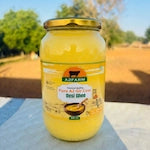
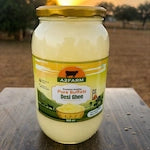
Pure A2 Gir Cow Ghee & Desi Buffalo Ghee Madeby Bilona Method
100% Pure Desi Ghee, Buy Online Now.
How We Make Our Bilona Ghee, Step by Step
Fresh A2 Milk from Our Cows
Turning Milk into Curd Naturally
Hand-Churning the Curd (Bilona Method)
Collecting Desi Makhan
Slow Heating on a Low Flame
Filtering for Purity
Packed with Love, Delivered Fresh
Blog posts
News
Bilona Ghee vs Normal Ghee: Which One Should You Actually Be Using?
There is this one memory I keep coming back to. I was in the kitchen watching my grandmother slowly stir a small pot of ghee on the lowest flame she could manage. The whole house smelled like roasted nuts and warm caramel. She never rushed that process. She had a name for it too. She called it bilona ghee, and she always said it was not the same thing as the ghee sitting on the supermarket shelf. For years I just nodded and moved on. But when I started paying closer attention to what goes into my food, especially things we use every single day, I went looking for real answers. Why does bilona ghee vs normal ghee even matter? Is there a genuine difference, or is it all just premium packaging and fancy labels? Here is everything I found out, broken down honestly so you can decide for yourself. What Exactly Is Bilona Ghee? Before we compare anything, it helps to understand the bilona method from the ground up. The word bilona actually refers to a traditional wooden churner called a madhani, which Indian households have used for centuries. Bilona ghee is ghee made the old way: milk is first converted into curd (dahi), the curd is hand-churned using this wooden churner until butter separates, and then that butter is slowly melted on a low flame until pure golden ghee is left behind. That is the whole process. Simple on paper, but incredibly time-consuming in practice. Why the Curd Step Matters So Much Most people do not realise that the single biggest difference between bilona ghee and normal ghee comes down to one thing: where the butter comes from. In traditional bilona ghee, you start with whole milk, ferment it into curd, and then churn butter from that curd. The fermentation step does two things. First, it develops a deeper, more layered flavour. Second, it helps preserve fat-soluble vitamins, particularly vitamins A, D, E, and K, along with short-chain fatty acids like butyric acid that are known to support gut health. When milk is fermented and then churned slowly, the nutrients stay intact far better than in high-speed industrial methods. A great example of this done right is A2 Farm's A2 Gir Cow Ghee, which is prepared using the traditional bilona process from fresh A2 milk sourced from Gir cows, one of India's most prized indigenous breeds. The milk itself is richer in A2 beta-casein protein, which many people find easier to digest compared to the A1 protein found in milk from hybrid or crossbred cattle. What Is Normal Ghee and How Is It Made? Normal ghee, what you usually find in big branded tins at the grocery store, follows a very different path. In most commercial or industrial ghee production, manufacturers use centrifugal machines to separate cream directly from milk. That cream is then churned mechanically into butter, and the butter is heated at high temperatures to produce ghee. There is no fermentation. There is no curd. There is no slow heating on a low flame. The whole operation is built around speed and volume, not taste or nutritional integrity. The Malai Method Some regular ghee in Indian homes is made from malai, the cream that collects on top of boiled milk. While this is certainly more natural than industrial production, it still skips the fermentation step entirely. Malai-based ghee tends to be smoother, lighter in colour, and lower in the complex flavour notes you get from hand-churned curd ghee. Bilona Ghee vs Normal Ghee: A Clear Comparison Factor Bilona Ghee Normal Ghee Starting material Whole milk fermented into curd Cream or malai separated from milk Butter extraction Hand-churned using wooden churner Mechanically separated or cream-churned Heating method Slow, low flame High heat, industrial processing Milk source (typical) Indigenous cow (Gir, Sahiwal) - A2 Any cow, often crossbred - A1 Texture Slightly grainy, especially when cooled Smooth and uniform Colour Deep golden-yellow Pale to light yellow Aroma Strong, nutty, caramelised Mild, sometimes flat Nutrient retention Higher (vitamins A, D, E, K; butyric acid) Lower due to high-heat processing Digestibility Generally easier on the stomach Can be heavier for sensitive digestion Price Higher (more labour, less yield) Lower (mass production) Taste, Texture, Aroma: The Real Sensory Difference If you have ever opened a jar of good bilona cow ghee and put your face close to smell it, you already know. There is no comparison. Bilona ghee has a rich aroma that is nutty and warm, almost like the moment between caramel and toasted sesame. When you melt it in a pan, it fills the entire room. That smell comes directly from the fermentation and slow-cooking process. It simply cannot be replicated in a factory. The texture of bilona ghee is also distinctive. When it cools down, it tends to go slightly grainy, that granular quality is actually considered a marker of purity and traditional preparation. If your ghee is perfectly smooth at room temperature, it is more likely cream-based. Colour is another giveaway. Because authentic bilona ghee often comes from grass-fed indigenous cow milk, particularly Gir cow milk, it picks up a deep golden-yellow hue from the higher beta-carotene content naturally present in that milk. For Cooking, Which One Works Better? Both work well in the kitchen, but they serve slightly different purposes. Bilona ghee shines in dishes where ghee is the star: dal tadka, khichdi drizzled at the table, rotis, or a spoonful on hot rice. Its bold aroma and taste add layers that a bland commercial ghee simply cannot. Normal ghee works fine for high-volume cooking where you need a neutral fat at scale, like frying, bulk preparations, or recipes where ghee is just one of many flavours. For daily cooking at home, especially if you want pure ghee with real flavour, the bilona variety is worth it. Nutrition, Digestion, and Who Should Choose What This is the part most blogs either overstate or oversimplify. Let me be straightforward. What the Research Actually Suggests Bilona ghee tends to retain more nutrients compared to industrially processed ghee, largely because fermentation and slow heating preserve heat-sensitive compounds. Specifically: Fat-soluble vitamins A, D, E, and K are better preserved through slow heating than through high-temperature industrial processing Butyric acid, a short-chain fatty acid linked to gut lining health, is found in higher concentrations in curd-churned ghee compared to cream-based ghee Omega-3 and omega-6 fatty acids are present in more favourable ratios in ghee made from indigenous cow milk like Gir cow milk None of this means bilona ghee is a cure for anything. But if you are choosing between two daily-use cooking fats, the one that has more nutritional value retained through a gentler process is the reasonable choice. Digestion: A Common Question Many people, especially those who grew up eating ghee, report that bilona ghee feels lighter and easier on the stomach. Part of this comes from the fermentation process, which partially breaks down certain milk compounds. Part of it may come from the A2 beta-casein protein in indigenous cow milk, which some research suggests is gentler to digest than A1 protein. That said, ghee in general is clarified butter. Most of the milk solids and lactose are removed in the final step. So even regular ghee is generally fine for most people. The digestion advantage of bilona ghee is real but should not be exaggerated. Who Should Lean Toward Bilona Ghee? People who cook food where ghee is the star flavour Those who prefer traditional, minimally processed foods Families using ghee as part of an Ayurvedic or holistic approach to eating Anyone who wants pure ghee made from A2 milk from indigenous breeds Who Might Prefer Normal Ghee? Those on a tighter budget for whom regular ghee serves the daily purpose Households where ghee is used purely as a cooking fat in large quantities People who prefer a milder, neutral taste in their cooking There is no wrong answer here. Both can be part of a healthy vegetarian diet. The difference is in how much you value the process, the taste, and the tradition. How to Identify Pure Bilona Ghee in India The market is unfortunately full of brands that use the word "bilona" as a marketing label without following the actual process. Here is how to check before you buy: 1. Texture when cooled: Authentic bilona ghee has a slightly grainy or granular texture when it solidifies at room temperature. Perfectly smooth ghee is a sign of cream-based production. 2. Colour: Look for a deep golden-yellow shade. Pale or nearly white ghee usually means the cows were grain-fed or the milk came from crossbred herds. 3. Aroma: The smell should be bold, nutty, and caramelised. Weak or synthetic-smelling ghee is a red flag. 4. Label transparency: Does the brand tell you which breed of cow the milk comes from? Do they mention Gir cow, Sahiwal, or another indigenous breed? Do they explain the bilona method specifically? Vague labels mean vague sourcing. 5. Price logic: Genuine bilona ghee yields less ghee from the same amount of milk because the curd-churning process is less efficient than cream separation. If the price is suspiciously low, the process has been cut somewhere. 6. Source and batch size: Small-batch producers who source from specific farms and tell you the story behind their milk are almost always more reliable than large brands making volume claims. Why A2 Farm's Approach Makes Sense A2 Farm makes two products that fit naturally into this conversation. A2 Gir Cow Ghee is made using the bilona method from the milk of Gir cows, an indigenous Indian breed known for producing A2 milk with high nutritional density. The process follows the traditional steps: curd fermentation, hand-churning, slow heating. If you are looking for the real thing, this is the reference point. Pure Desi Buffalo Ghee is a strong alternative for those who prefer a richer, more robust taste for daily cooking. Buffalo ghee has a naturally high fat content and works beautifully in Indian cooking, from rich curries to halwa. It is a different flavour profile from cow ghee, but equally authentic in its own right. Both products are available on A2 Farm's full collection, where you can compare and choose based on your household needs. 5 FAQs About Bilona Ghee vs Normal Ghee FAQ 1: Is bilona ghee actually better than normal ghee? It depends on what matters to you. Bilona ghee is more traditional, more aromatic, retains more nutrients, and is often made from A2 milk from indigenous cows. Normal ghee is more widely available and cheaper. If process and quality matter to you, bilona ghee wins. If budget is the priority, regular ghee still serves the purpose. FAQ 2: Is bilona ghee made from curd or cream? Bilona ghee is specifically made from curd (dahi), not cream. Milk is first fermented into curd, then hand-churned to separate butter, and then that butter is slow-heated into ghee. This is fundamentally different from the malai or cream-based method used for normal ghee. FAQ 3: Why does bilona ghee cost more than regular ghee? The bilona method is slower and more labour-intensive. It also produces less ghee from the same amount of milk compared to cream separation. When the milk comes from indigenous cows like the Gir breed, production costs go up further. You are paying for a genuine traditional process, not just a label. FAQ 4: Is bilona ghee good for digestion? Many people find it easier on the stomach, especially bilona ghee made from A2 milk. The fermentation step and the A2 beta-casein protein are both thought to be gentler on digestion than the A1 protein in hybrid cow milk. That said, ghee is clarified fat and most dairy components are already removed, so it is generally easy to digest for most people regardless. FAQ 5: What is the main taste difference between bilona and normal ghee? Bilona ghee has a bold, rich aroma, a nutty and slightly caramelised flavour, and a slightly grainy texture when cooled. Normal ghee is smoother, milder, and more neutral in taste. If you have ever tasted the difference in a simple dal or khichdi drizzled with each type, you will understand why people pay more for the bilona version. 2 Quick Tips Before You Buy Ghee Quick Tip 1: Always check the texture first. Put a small amount in your palm and let it melt. Authentic bilona ghee will leave a slightly grainy residue as it warms. Cream-based ghee melts uniformly and smoothly with no texture variation. Quick Tip 2: Smell it before you cook with it. Good bilona ghee smells rich and nutty even at room temperature. If the aroma is weak, flat, or artificial, the product likely did not go through the traditional bilona process, regardless of what the label says. Final Thoughts The difference between bilona ghee and normal ghee is not just about marketing. It is about the entire process, from the cow, to the milk, to the curd, to the slow-churned butter, to the low flame. Every step either adds to or takes away from what ends up in your food. If you are already using ghee daily, which most Indian vegetarian households do, it is worth asking where yours comes from and how it was made. Bilona ghee is about process. Normal ghee is about convenience. Both have a place, but if you want the flavour, the tradition, and the nutritional value that comes from doing it the right way, you already know which one to choose. Explore A2 Farm's full range of pure desi ghee and see the difference for yourself.
News
A2 Cow Ghee Benefits: What I Learned from My Grandmother's Kitchen Diary
I never thought a small steel jar sitting in my grandmother's kitchen would change how I think about food. She kept a handwritten diary, pages filled with home remedies, ingredient notes, and little observations she made while taking care of my grandfather who had diabetes. One entry that kept coming up: pure desi cow ghee, specifically from Gir cows, made the old-fashioned way. That curiosity started a journey I now share with you. If you have been searching for a2 cow ghee benefits and wondering whether it is worth the switch, this is the honest, real-life breakdown you need. No jargon. No fluff. Just what actually matters. What is A2 Cow Ghee? (And Why Does It Even Matter?) Understanding the A2 Protein Difference Most commercial ghee in India today is made from crossbred cow milk that contains the A1 beta-casein protein. A2 cow ghee, on the other hand, comes from indigenous desi cows, especially the Gir cow, whose milk naturally carries only the A2 beta-casein protein. This difference is not just marketing. Research suggests A1 protein may be harder on the digestive system for some people, while A2 milk is considered easier to digest and gentler on the gut. For a vegetarian household like ours, where ghee is part of almost every meal, this distinction matters a lot. So when people talk about a2 gir cow ghee benefits, they are really talking about a combination of the right breed, the right milk, and the right process. All three together is what makes it special. How Bilona Ghee is Made: The Method That Changes Everything The Traditional Bilona Method, Step by Step My grandmother's diary had a whole section on how ghee should be made. What she described without naming it was the Bilona method, the traditional hand-churning process that has been used in Indian households for generations. Here is how it works: Step 1: Fresh A2 milk from the Gir cow is boiled and cooled. Step 2: It is curdled into curd (dahi) using a natural starter. Step 3: The curd is hand-churned using a wooden churner (bilona) to separate butter. Step 4: The butter is then slow-heated over a low flame until the pure ghee separates naturally. This slow, careful process means the fat-soluble vitamins, natural aroma, and nutritional value are preserved, not stripped away by high-heat industrial processing. That is why bilona ghee benefits go beyond what regular commercial ghee can offer, it is simply a more complete, more natural product. At A2Farm's Pure A2 Gir Cow Ghee, this exact method is followed, because there are no shortcuts worth taking when it comes to real ghee. Top A2 Cow Ghee Benefits You Should Know About Let me walk you through the benefits that came up again and again, both in my family's experience and in what Ayurveda has said for centuries. These are the real benefits of a2 cow ghee worth knowing. 1. Better Digestion and Gut Health This is the one that surprised our family the most. My grandfather, dealing with diabetes, had a sensitive stomach and struggled with heavy meals. After switching to desi cow ghee, there was a noticeable improvement in his digestion and comfort after eating. The reason is butyric acid, a short-chain fatty acid naturally present in A2 ghee. It is the primary fuel for the cells lining your colon, helping repair the gut lining and reducing inflammation. For anyone dealing with bloating, sluggish digestion, or gut health concerns, this is genuinely meaningful. It also stimulates the secretion of digestive enzymes, making your body process food more efficiently. 2. Stronger Immunity A2 ghee is rich in fat-soluble vitamins, specifically vitamins A, D, E, and K. These are not just general health nutrients. Vitamin A supports the immune response. Vitamin D regulates how the immune system reacts to infection. Vitamin E is one of the most powerful antioxidants the body uses. Vitamin K supports clotting and bone health. Getting all four from a single pure, natural food source is genuinely valuable, especially in a vegetarian diet where some of these vitamins can be harder to get in adequate amounts. Regular use of a2 ghee in daily cooking is a simple way to support immunity without any supplements. 3. Heart Health Support A lot of people hesitate here because they associate ghee with cholesterol. But the truth is more nuanced. A2 cow ghee contains omega fatty acids and CLA (conjugated linoleic acid), both of which have been associated with supporting cardiovascular health when consumed in moderation. The healthy fats in Bilona ghee are different from processed trans fats. They do not clog arteries the same way refined vegetable oils can. Ayurvedic texts have consistently recommended ghee for heart health, not as a fat to fear, but as a nourishing fat that supports the body when used wisely. 4. Glowing Skin from the Inside I started noticing this about six weeks after we added A2 ghee back into our daily meals. Skin felt less dry, more supple. There is a reason traditional home remedies always included ghee for skin, it is rich in vitamins A and E, both essential for cell regeneration and skin health. The nutrient absorption benefit matters here too. Fat-soluble vitamins like A, D, E, and K are only absorbed properly when consumed with fat. Cooking vegetables and dal with a spoon of A2 ghee actually helps your body extract more nutrition from the meal. The skin glow people notice is not coincidence, it is better nourishment at a cellular level. 5. Sustained Energy Without Spikes Unlike refined carbohydrates that spike and crash your blood sugar, the medium-chain fatty acids in A2 ghee are metabolized quickly into energy without spiking insulin. For my grandfather, managing diabetes, this was meaningful. Ghee in small amounts with meals helped slow glucose absorption, keeping energy steadier through the day. This is also why athletes and people following active lifestyles are returning to ghee as a pre-workout or morning energy food. A spoon of ghee in warm water or with roti in the morning is a traditional energy boost that actually works. 6. Lactose-Friendly and Easy to Digest One of the lesser-known but very practical a2 ghee benefits is that it is effectively lactose-free. The clarification process removes milk solids, including casein and lactose. So even people who are sensitive to dairy can usually tolerate A2 cow ghee without discomfort. This makes it one of the most universally accessible traditional fats in an Indian kitchen. 7. High Smoke Point for Healthy Cooking A2 ghee has a high smoke point of around 250°C, which is significantly higher than most cooking oils including olive oil. This means it does not break down into harmful free radicals at normal cooking temperatures. Whether you are sautéing vegetables, making dal tadka, or just spreading it on a hot roti, A2 ghee stays stable, pure, and nutritionally intact during daily use. A2 Cow Ghee vs Regular Ghee: What Is Actually Different? Side-by-Side Comparison Feature A2 Gir Cow Ghee Regular Ghee Protein type A2 beta-casein A1 beta-casein (typically) Preparation Traditional Bilona method Industrial/direct cream Digestibility Higher — easy to digest Moderate Butyric acid Rich and naturally preserved Lower, varies by process Vitamins A, D, E, K Higher concentration Present but often lower Aroma and taste Rich, traditional, distinct Milder or neutral Additives None — preservative-free Sometimes added The difference in digestibility and nutrient density is the main reason people who have switched to A2 Gir cow ghee rarely go back to regular commercial ghee. A2 Cow Ghee vs Buffalo Ghee: Which One Is Right for You? Two Great Choices, Different Strengths This comes up a lot, especially in Indian households where buffalo ghee has always been common. Both are pure, natural, and traditionally valuable. But they are not the same. A2 Gir cow ghee is lighter, more easily metabolized, and richer in those fat-soluble vitamins we have been talking about. It is the better choice for everyday use, digestive health, and families with younger children or elderly members. Ayurveda specifically recommends desi cow ghee for health and healing purposes. Buffalo ghee is heavier, richer in fat, and has a distinct creamy flavor. It is calorie-dense and works beautifully in cooking where a rich, full taste is needed. It is also a great choice for people who want a pure, natural fat but prefer a bolder flavor profile. Both are preservative-free, pure, and made with care. You can explore A2Farm's Pure Desi Buffalo Ghee if you want to experience both and decide which works best for your household. How to Use A2 Cow Ghee Daily Simple, Practical Ways to Add It to Your Routine One thing my family learned is that ghee does not need a fancy recipe. It just needs consistency. Here are the ways we use it every day: Morning: One teaspoon in warm water on an empty stomach. It is gentle, stimulates digestion, and gives a calm, sustained start to the day without sugar spikes. With dal and sabzi: A small spoon of ghee as a tadka or finishing touch. It activates the spices, adds depth to flavor, and supports nutrient absorption from the vegetables. With roti or rice: The most traditional use. A small amount spread on hot roti or stirred into rice with dal is a complete, satisfying meal. In Ayurvedic cooking: Ghee is the medium of choice for most Ayurvedic preparations because it carries the properties of herbs deeper into the body. Even a small amount used in this context has compounding benefits over time. For cooking, remember the high smoke point, A2 cow ghee is one of the safest fats for sautéing, roasting, or any high-heat preparation. It stays stable where oils start to break down. Who Should Be Mindful About Ghee Consumption Moderation Is Always the Key A2 cow ghee is excellent for most people, but a few notes on mindful use:People with existing heart conditions or very high LDL cholesterol should check with their doctor before increasing ghee intake significantly. The healthy fats in ghee are beneficial in moderation, but quantity still matters for those managing specific conditions. If you are trying to lose weight, ghee is not the enemy, but portions should be kept to one to two teaspoons per day. Ghee is calorie-dense, and excess of any fat, even a healthy one, should be balanced with overall diet. Children, elderly people, and those recovering from illness can actually benefit greatly from small daily amounts of A2 ghee, Ayurveda has long recognized it as a traditional, natural tonic for building strength. Which A2Farm Ghee Should You Choose? A Simple Guide to Our Three Products At A2Farm, we keep things simple. The ghee is made the traditional way, pure, natural, and without any additives or preservatives. Here is how to choose: For everyday health, digestion, and immunity: Go with Pure A2 Gir Cow Ghee, the Bilona method, Gir cow milk, full nutritional value intact. For richer cooking or a bolder flavor: Try Pure Desi Buffalo Ghee, traditional, pure, and perfect for households that want a heavier, full-bodied ghee. Want to compare or gift both? Browse our full collection here and find what suits your family best. Frequently Asked Questions About A2 Cow Ghee Benefits What is A2 cow ghee? A2 cow ghee is ghee prepared from the milk of indigenous Indian cows — most commonly the Gir cow, whose milk contains only the A2 beta-casein protein. When made using the traditional Bilona method, it retains its full nutritional profile including butyric acid, omega fatty acids, and fat-soluble vitamins A, D, E, and K. Is A2 ghee better than regular ghee? For digestion, purity, and nutritional value, most people find A2 ghee noticeably better. The A2 protein is gentler on the gut, the Bilona method preserves more nutrients, and the product is typically preservative-free and more traceable. That said, the best ghee is the one used consistently and in moderation. Can I eat A2 ghee every day? Yes, one to two teaspoons a day with meals is a healthy, time-tested practice. In Ayurveda, daily ghee consumption is considered essential for overall wellness, gut health, and nourishment of the nervous system. Start small if you are new to it and build up gradually. Is A2 cow ghee good for skin? It supports skin health from the inside out, through better nutrient absorption and the vitamins A and E it provides. Externally, many people also apply a small amount to dry skin, cracked heels, or lips as a natural moisturizer — a very old Indian practice that still works. Is A2 ghee safe for lactose-intolerant people? In most cases, yes. The clarification process in ghee production removes milk solids including lactose and casein, making it lactose-free and easy to digest for the majority of people who are dairy-sensitive. However, severe dairy allergies are different — consult a doctor in that case. Final Thought: Back to That Steel Jar My grandmother did not use the word Bilona. She did not cite butyric acid or omega fatty acids. She just knew, from decades of observation, that ghee made the old way from good desi cow milk was something worth keeping in the house. Her diary was her way of making sure that knowledge did not get lost. I share this now because the choices we make in the kitchen, even something as small as which fat we cook with, compound over years into real health outcomes. Switching to pure, traditional, homemade-style A2 Gir cow ghee is not a trend. It is a return to something that has worked for a very long time. If you are ready to try it, you know where to start: explore the full range at A2Farm.
News
Buffalo Ghee vs Cow Ghee: Which One Should You Actually Use Every Day?
I still remember the day I stood in front of two identical-looking jars in our kitchen and had absolutely no clue which one to reach for. One had a warm, golden colour. The other was creamy white. My grandmother had kept both for years, always using them for different things, but nobody had ever sat me down and explained why. That confusion is exactly why I am writing this today. If you have ever searched buffalo ghee vs cow ghee and ended up reading the same list of bullet points on every website, this article is for you. I want to actually help you understand the difference, make a smart choice for your family, and cook better because of it. What Is Cow Ghee and What Is Buffalo Ghee? Understanding Cow Ghee Cow ghee is made from the milk of desi cows, ideally through the traditional Bilona method, where curd is churned to make butter, and that butter is then slow-cooked into ghee. The result is a golden yellow ghee with a nutty aroma and a slightly grainy texture when it cools. In India, A2 Gir cow ghee is considered especially valuable. The A2 protein in Gir cow milk is easier to process for most people, and the traditional Bilona method preserves more of the natural goodness from the milk. Understanding Buffalo Ghee Desi buffalo ghee comes from buffalo milk, which has naturally higher fat content. The colour is creamy white, the texture is denser, and the taste is richer and heavier than cow ghee. It is made using a similar process, but the higher fat content gives it a different feel in the kitchen and on the plate. Both are pure desi ghee options. Both have a place in Indian cooking. The question is just knowing which one fits which purpose. Buffalo Ghee vs Cow Ghee: The Main Differences Feature Cow Ghee Buffalo Ghee Colour Golden yellow Creamy white Texture Slightly grainy, lighter Dense, richer Fat Content Lower Higher Digestibility Easier to digest Heavier to digest Aroma Nutty, mild Stronger, richer Taste Light, slightly sweet Bold, full-bodied Best Use Daily cooking, Ayurveda Sweets, deep frying, parathas Smoke Point Moderate-high Higher Shelf Life Good Slightly longer Ayurvedic Use Highly recommended Moderate use This table gives you the quick picture, but the real difference shows up in how you cook and how your body responds. Let me walk through each one. Nutrition and Fat Profile: What You Are Actually Eating Buffalo ghee has a higher fat content overall, which is why it feels heavier and more filling. The calorie count per spoon is higher, and it gives you more sustained energy — which is why it works so well for people doing physical labour or needing dense calories. Cow ghee has a comparatively lighter fat profile. It contains CLA (conjugated linoleic acid), Omega-3 fatty acids, and fat-soluble vitamins like A, D, E, and K. When made from A2 Gir cow milk through the Bilona method, the nutrition profile is considered especially rich. Both contain butyric acid, which supports gut lining health. Both have good fats that the body can use for energy. But cow ghee tends to be the better daily option for most Indian families because of how the body handles it over time. Digestibility and Ayurveda: What Traditional Wisdom Says In Ayurveda, cow ghee is called Sattvik food. It is considered easy to digest, good for the gut, and beneficial for all three doshas when used in the right amount. It supports agni (digestive fire) rather than suppressing it. This is why Ayurvedic practitioners have traditionally recommended cow ghee for daily use, for children, for the elderly, and for anyone recovering from illness. Buffalo ghee, from an Ayurvedic perspective, is considered heavier and more Tamasic in nature. That does not make it bad, it just means it is better suited for specific uses, like building strength, improving sleep, and for physically active people who need more calorie-dense food. For a vegetarian family cooking three meals a day, A2 Gir cow ghee is usually the one that fits better into everyday meals without making the food feel heavy. Quick Tip: If you are new to using ghee daily, start with cow ghee. Add one teaspoon to your dal or roti and see how your body responds. Most people find it lighter and more comfortable than they expected. Taste, Aroma, and Texture: The Sensory Difference When you open a jar of golden yellow ghee made from A2 Gir cow milk, the aroma is warm and nutty. There is a mild sweetness to it. It melts almost instantly and spreads beautifully over hot rotis. Buffalo ghee has a bolder, richer scent. It is more intense in the pan and gives food a heavier, more robust flavour. If you have ever had halwa made with white ghee at a dhaba or a wedding, you know that distinct taste. That richness comes from buffalo ghee. For texture, cow ghee tends to be slightly grainy at room temperature in winter, which is actually a sign of purity. Buffalo ghee stays smoother and does not granulate as easily because of its higher fat content. Neither texture is better, they are just different, and once you cook with both, you start to notice what each one does to a dish. Best Use Cases in Indian Kitchens When to Reach for Cow Ghee Daily cooking is where cow ghee shines — adding a spoon to dal, drizzling it over khichdi, using it to temper spices for sabzi, making simple rotis or phulkas. It is also the go-to for: Cooking for children who need something lighter Preparing Ayurvedic recipes where digestibility matters Porridge, kheer, and light desserts where a subtle flavour is better Meals for elderly family members who need easy-to-digest food When Buffalo Ghee Is the Better Choice Buffalo ghee is the one you want when richness and depth are the goal: Halwa, gajar ka halwa, besan ladoo, suji halwa and other sweets where that buttery richness is the point Deep frying where a higher smoke point helps maintain stability at high heat Parathas where you want a richer, more satisfying result Rajasthani and Punjabi recipes that are traditionally made with white ghee High-energy meals for people who are physically active or need more calories Quick Tip: Keep both ghee types at home if you cook a variety of dishes. Use cow ghee Monday to Friday for everyday meals and reach for buffalo ghee when you are making something special over the weekend. Which One Should You Buy? Choose Cow Ghee If You… Cook for your family every day and want something light and digestible Follow or are interested in Ayurvedic eating Are cooking for children, elderly parents, or anyone with a sensitive digestive system Want that warm, golden colour and mild flavour in your food Are vegetarian and looking for a daily nutritional addition Choose Buffalo Ghee If You… Make a lot of traditional Indian sweets at home Do deep frying or high-heat cooking regularly Need more calorie-dense food for an active lifestyle Want a richer, bolder flavour in specific dishes Are cooking for festive occasions or special family meals Choose Both If You… Have a full Indian kitchen where both light daily cooking and rich festive cooking happen Want to use the right ghee for the right job — the way traditional Indian households have always done You can browse and compare both options at A2 Farm's ghee collection and pick what fits your kitchen. How to Identify Pure Ghee at Home Whether you are buying cow ghee or buffalo ghee, here is how you can check if what you have is genuine: The heat test: Pure ghee melts within seconds when you place a small amount in your palm. If it takes a long time, something is off. The colour check: Pure cow ghee is a warm golden yellow. Pure buffalo ghee is white or cream-coloured. If cow ghee looks white or buffalo ghee looks yellow, ask questions. The granulation test: Pure cow ghee in cooler temperatures will develop a slightly grainy, crystalline texture. This is natural and actually a good sign. The smell: Both types of pure ghee have a distinct, pleasant aroma. Flat or chemical-smelling ghee has often been processed or adulterated. The source: The most reliable way to get pure ghee is to buy from a brand that is transparent about the process. The Bilona method, A2 milk, and direct farm sourcing are all signs worth looking for. Frequently Asked Questions 1. Which is better for daily use, cow ghee or buffalo ghee? Cow ghee is the better choice for daily use. It is lighter, easier to digest, and works well for everyday cooking. Buffalo ghee is richer and better suited for specific uses like sweets and high-heat cooking, rather than three meals a day. 2. Is buffalo ghee good for sweets? Yes, absolutely. Buffalo ghee is actually preferred for Indian sweets because its richer texture and bold flavour enhance the taste of halwa, ladoos, and other traditional desserts. Many traditional recipes specifically call for white ghee, which is buffalo ghee. 3. Does cow ghee digest more easily than buffalo ghee? Yes, this is one of the most consistent differences between the two. Cow ghee has a lighter fat profile and is considered easy to digest, which is why Ayurveda recommends it for daily consumption, for children, and for people with digestive sensitivities. 4. Which ghee is better for Ayurveda? Cow ghee, especially A2 Gir cow ghee made through the Bilona method, is the one most strongly associated with Ayurvedic practice. It is described as Sattvik, meaning it promotes clarity, balance, and digestive health. Buffalo ghee has its place in Ayurveda too, but cow ghee is the recommended daily option. 5. Should I keep both cow ghee and buffalo ghee at home? If your kitchen handles both everyday cooking and festive or rich cooking, then yes, keeping both makes practical sense. Use cow ghee for your daily meals, dal, rotis, and light cooking. Use buffalo ghee when you are making sweets, parathas, or anything that calls for richness.Many traditional Indian households have always done exactly this. Conclusion The buffalo ghee vs cow ghee question does not have one single correct answer. It depends on what you are cooking, who you are cooking for, and what your body needs. For most Indian families eating vegetarian meals every day, cow ghee is the gentler, more digestible, and more versatile choice for regular use. Buffalo ghee earns its place in the kitchen for richer dishes, sweets, and high-heat cooking. The good news is you do not have to choose just one. Use them both, use them thoughtfully, and your food will be better for it.
News
Bilona Ghee vs Normal Ghee: Which One Should You Actually Be Using?
There is this one memory I keep coming back to. I was in the kitchen watching my grandmother slowly stir a small pot of ghee on the lowest flame she could manage. The whole house smelled like roasted nuts and warm caramel. She never rushed that process. She had a name for it too. She called it bilona ghee, and she always said it was not the same thing as the ghee sitting on the supermarket shelf. For years I just nodded and moved on. But when I started paying closer attention to what goes into my food, especially things we use every single day, I went looking for real answers. Why does bilona ghee vs normal ghee even matter? Is there a genuine difference, or is it all just premium packaging and fancy labels? Here is everything I found out, broken down honestly so you can decide for yourself. What Exactly Is Bilona Ghee? Before we compare anything, it helps to understand the bilona method from the ground up. The word bilona actually refers to a traditional wooden churner called a madhani, which Indian households have used for centuries. Bilona ghee is ghee made the old way: milk is first converted into curd (dahi), the curd is hand-churned using this wooden churner until butter separates, and then that butter is slowly melted on a low flame until pure golden ghee is left behind. That is the whole process. Simple on paper, but incredibly time-consuming in practice. Why the Curd Step Matters So Much Most people do not realise that the single biggest difference between bilona ghee and normal ghee comes down to one thing: where the butter comes from. In traditional bilona ghee, you start with whole milk, ferment it into curd, and then churn butter from that curd. The fermentation step does two things. First, it develops a deeper, more layered flavour. Second, it helps preserve fat-soluble vitamins, particularly vitamins A, D, E, and K, along with short-chain fatty acids like butyric acid that are known to support gut health. When milk is fermented and then churned slowly, the nutrients stay intact far better than in high-speed industrial methods. A great example of this done right is A2 Farm's A2 Gir Cow Ghee, which is prepared using the traditional bilona process from fresh A2 milk sourced from Gir cows, one of India's most prized indigenous breeds. The milk itself is richer in A2 beta-casein protein, which many people find easier to digest compared to the A1 protein found in milk from hybrid or crossbred cattle. What Is Normal Ghee and How Is It Made? Normal ghee, what you usually find in big branded tins at the grocery store, follows a very different path. In most commercial or industrial ghee production, manufacturers use centrifugal machines to separate cream directly from milk. That cream is then churned mechanically into butter, and the butter is heated at high temperatures to produce ghee. There is no fermentation. There is no curd. There is no slow heating on a low flame. The whole operation is built around speed and volume, not taste or nutritional integrity. The Malai Method Some regular ghee in Indian homes is made from malai, the cream that collects on top of boiled milk. While this is certainly more natural than industrial production, it still skips the fermentation step entirely. Malai-based ghee tends to be smoother, lighter in colour, and lower in the complex flavour notes you get from hand-churned curd ghee. Bilona Ghee vs Normal Ghee: A Clear Comparison Factor Bilona Ghee Normal Ghee Starting material Whole milk fermented into curd Cream or malai separated from milk Butter extraction Hand-churned using wooden churner Mechanically separated or cream-churned Heating method Slow, low flame High heat, industrial processing Milk source (typical) Indigenous cow (Gir, Sahiwal) - A2 Any cow, often crossbred - A1 Texture Slightly grainy, especially when cooled Smooth and uniform Colour Deep golden-yellow Pale to light yellow Aroma Strong, nutty, caramelised Mild, sometimes flat Nutrient retention Higher (vitamins A, D, E, K; butyric acid) Lower due to high-heat processing Digestibility Generally easier on the stomach Can be heavier for sensitive digestion Price Higher (more labour, less yield) Lower (mass production) Taste, Texture, Aroma: The Real Sensory Difference If you have ever opened a jar of good bilona cow ghee and put your face close to smell it, you already know. There is no comparison. Bilona ghee has a rich aroma that is nutty and warm, almost like the moment between caramel and toasted sesame. When you melt it in a pan, it fills the entire room. That smell comes directly from the fermentation and slow-cooking process. It simply cannot be replicated in a factory. The texture of bilona ghee is also distinctive. When it cools down, it tends to go slightly grainy, that granular quality is actually considered a marker of purity and traditional preparation. If your ghee is perfectly smooth at room temperature, it is more likely cream-based. Colour is another giveaway. Because authentic bilona ghee often comes from grass-fed indigenous cow milk, particularly Gir cow milk, it picks up a deep golden-yellow hue from the higher beta-carotene content naturally present in that milk. For Cooking, Which One Works Better? Both work well in the kitchen, but they serve slightly different purposes. Bilona ghee shines in dishes where ghee is the star: dal tadka, khichdi drizzled at the table, rotis, or a spoonful on hot rice. Its bold aroma and taste add layers that a bland commercial ghee simply cannot. Normal ghee works fine for high-volume cooking where you need a neutral fat at scale, like frying, bulk preparations, or recipes where ghee is just one of many flavours. For daily cooking at home, especially if you want pure ghee with real flavour, the bilona variety is worth it. Nutrition, Digestion, and Who Should Choose What This is the part most blogs either overstate or oversimplify. Let me be straightforward. What the Research Actually Suggests Bilona ghee tends to retain more nutrients compared to industrially processed ghee, largely because fermentation and slow heating preserve heat-sensitive compounds. Specifically: Fat-soluble vitamins A, D, E, and K are better preserved through slow heating than through high-temperature industrial processing Butyric acid, a short-chain fatty acid linked to gut lining health, is found in higher concentrations in curd-churned ghee compared to cream-based ghee Omega-3 and omega-6 fatty acids are present in more favourable ratios in ghee made from indigenous cow milk like Gir cow milk None of this means bilona ghee is a cure for anything. But if you are choosing between two daily-use cooking fats, the one that has more nutritional value retained through a gentler process is the reasonable choice. Digestion: A Common Question Many people, especially those who grew up eating ghee, report that bilona ghee feels lighter and easier on the stomach. Part of this comes from the fermentation process, which partially breaks down certain milk compounds. Part of it may come from the A2 beta-casein protein in indigenous cow milk, which some research suggests is gentler to digest than A1 protein. That said, ghee in general is clarified butter. Most of the milk solids and lactose are removed in the final step. So even regular ghee is generally fine for most people. The digestion advantage of bilona ghee is real but should not be exaggerated. Who Should Lean Toward Bilona Ghee? People who cook food where ghee is the star flavour Those who prefer traditional, minimally processed foods Families using ghee as part of an Ayurvedic or holistic approach to eating Anyone who wants pure ghee made from A2 milk from indigenous breeds Who Might Prefer Normal Ghee? Those on a tighter budget for whom regular ghee serves the daily purpose Households where ghee is used purely as a cooking fat in large quantities People who prefer a milder, neutral taste in their cooking There is no wrong answer here. Both can be part of a healthy vegetarian diet. The difference is in how much you value the process, the taste, and the tradition. How to Identify Pure Bilona Ghee in India The market is unfortunately full of brands that use the word "bilona" as a marketing label without following the actual process. Here is how to check before you buy: 1. Texture when cooled: Authentic bilona ghee has a slightly grainy or granular texture when it solidifies at room temperature. Perfectly smooth ghee is a sign of cream-based production. 2. Colour: Look for a deep golden-yellow shade. Pale or nearly white ghee usually means the cows were grain-fed or the milk came from crossbred herds. 3. Aroma: The smell should be bold, nutty, and caramelised. Weak or synthetic-smelling ghee is a red flag. 4. Label transparency: Does the brand tell you which breed of cow the milk comes from? Do they mention Gir cow, Sahiwal, or another indigenous breed? Do they explain the bilona method specifically? Vague labels mean vague sourcing. 5. Price logic: Genuine bilona ghee yields less ghee from the same amount of milk because the curd-churning process is less efficient than cream separation. If the price is suspiciously low, the process has been cut somewhere. 6. Source and batch size: Small-batch producers who source from specific farms and tell you the story behind their milk are almost always more reliable than large brands making volume claims. Why A2 Farm's Approach Makes Sense A2 Farm makes two products that fit naturally into this conversation. A2 Gir Cow Ghee is made using the bilona method from the milk of Gir cows, an indigenous Indian breed known for producing A2 milk with high nutritional density. The process follows the traditional steps: curd fermentation, hand-churning, slow heating. If you are looking for the real thing, this is the reference point. Pure Desi Buffalo Ghee is a strong alternative for those who prefer a richer, more robust taste for daily cooking. Buffalo ghee has a naturally high fat content and works beautifully in Indian cooking, from rich curries to halwa. It is a different flavour profile from cow ghee, but equally authentic in its own right. Both products are available on A2 Farm's full collection, where you can compare and choose based on your household needs. 5 FAQs About Bilona Ghee vs Normal Ghee FAQ 1: Is bilona ghee actually better than normal ghee? It depends on what matters to you. Bilona ghee is more traditional, more aromatic, retains more nutrients, and is often made from A2 milk from indigenous cows. Normal ghee is more widely available and cheaper. If process and quality matter to you, bilona ghee wins. If budget is the priority, regular ghee still serves the purpose. FAQ 2: Is bilona ghee made from curd or cream? Bilona ghee is specifically made from curd (dahi), not cream. Milk is first fermented into curd, then hand-churned to separate butter, and then that butter is slow-heated into ghee. This is fundamentally different from the malai or cream-based method used for normal ghee. FAQ 3: Why does bilona ghee cost more than regular ghee? The bilona method is slower and more labour-intensive. It also produces less ghee from the same amount of milk compared to cream separation. When the milk comes from indigenous cows like the Gir breed, production costs go up further. You are paying for a genuine traditional process, not just a label. FAQ 4: Is bilona ghee good for digestion? Many people find it easier on the stomach, especially bilona ghee made from A2 milk. The fermentation step and the A2 beta-casein protein are both thought to be gentler on digestion than the A1 protein in hybrid cow milk. That said, ghee is clarified fat and most dairy components are already removed, so it is generally easy to digest for most people regardless. FAQ 5: What is the main taste difference between bilona and normal ghee? Bilona ghee has a bold, rich aroma, a nutty and slightly caramelised flavour, and a slightly grainy texture when cooled. Normal ghee is smoother, milder, and more neutral in taste. If you have ever tasted the difference in a simple dal or khichdi drizzled with each type, you will understand why people pay more for the bilona version. 2 Quick Tips Before You Buy Ghee Quick Tip 1: Always check the texture first. Put a small amount in your palm and let it melt. Authentic bilona ghee will leave a slightly grainy residue as it warms. Cream-based ghee melts uniformly and smoothly with no texture variation. Quick Tip 2: Smell it before you cook with it. Good bilona ghee smells rich and nutty even at room temperature. If the aroma is weak, flat, or artificial, the product likely did not go through the traditional bilona process, regardless of what the label says. Final Thoughts The difference between bilona ghee and normal ghee is not just about marketing. It is about the entire process, from the cow, to the milk, to the curd, to the slow-churned butter, to the low flame. Every step either adds to or takes away from what ends up in your food. If you are already using ghee daily, which most Indian vegetarian households do, it is worth asking where yours comes from and how it was made. Bilona ghee is about process. Normal ghee is about convenience. Both have a place, but if you want the flavour, the tradition, and the nutritional value that comes from doing it the right way, you already know which one to choose. Explore A2 Farm's full range of pure desi ghee and see the difference for yourself.
News
A2 Cow Ghee Benefits: What I Learned from My Grandmother's Kitchen Diary
I never thought a small steel jar sitting in my grandmother's kitchen would change how I think about food. She kept a handwritten diary, pages filled with home remedies, ingredient notes, and little observations she made while taking care of my grandfather who had diabetes. One entry that kept coming up: pure desi cow ghee, specifically from Gir cows, made the old-fashioned way. That curiosity started a journey I now share with you. If you have been searching for a2 cow ghee benefits and wondering whether it is worth the switch, this is the honest, real-life breakdown you need. No jargon. No fluff. Just what actually matters. What is A2 Cow Ghee? (And Why Does It Even Matter?) Understanding the A2 Protein Difference Most commercial ghee in India today is made from crossbred cow milk that contains the A1 beta-casein protein. A2 cow ghee, on the other hand, comes from indigenous desi cows, especially the Gir cow, whose milk naturally carries only the A2 beta-casein protein. This difference is not just marketing. Research suggests A1 protein may be harder on the digestive system for some people, while A2 milk is considered easier to digest and gentler on the gut. For a vegetarian household like ours, where ghee is part of almost every meal, this distinction matters a lot. So when people talk about a2 gir cow ghee benefits, they are really talking about a combination of the right breed, the right milk, and the right process. All three together is what makes it special. How Bilona Ghee is Made: The Method That Changes Everything The Traditional Bilona Method, Step by Step My grandmother's diary had a whole section on how ghee should be made. What she described without naming it was the Bilona method, the traditional hand-churning process that has been used in Indian households for generations. Here is how it works: Step 1: Fresh A2 milk from the Gir cow is boiled and cooled. Step 2: It is curdled into curd (dahi) using a natural starter. Step 3: The curd is hand-churned using a wooden churner (bilona) to separate butter. Step 4: The butter is then slow-heated over a low flame until the pure ghee separates naturally. This slow, careful process means the fat-soluble vitamins, natural aroma, and nutritional value are preserved, not stripped away by high-heat industrial processing. That is why bilona ghee benefits go beyond what regular commercial ghee can offer, it is simply a more complete, more natural product. At A2Farm's Pure A2 Gir Cow Ghee, this exact method is followed, because there are no shortcuts worth taking when it comes to real ghee. Top A2 Cow Ghee Benefits You Should Know About Let me walk you through the benefits that came up again and again, both in my family's experience and in what Ayurveda has said for centuries. These are the real benefits of a2 cow ghee worth knowing. 1. Better Digestion and Gut Health This is the one that surprised our family the most. My grandfather, dealing with diabetes, had a sensitive stomach and struggled with heavy meals. After switching to desi cow ghee, there was a noticeable improvement in his digestion and comfort after eating. The reason is butyric acid, a short-chain fatty acid naturally present in A2 ghee. It is the primary fuel for the cells lining your colon, helping repair the gut lining and reducing inflammation. For anyone dealing with bloating, sluggish digestion, or gut health concerns, this is genuinely meaningful. It also stimulates the secretion of digestive enzymes, making your body process food more efficiently. 2. Stronger Immunity A2 ghee is rich in fat-soluble vitamins, specifically vitamins A, D, E, and K. These are not just general health nutrients. Vitamin A supports the immune response. Vitamin D regulates how the immune system reacts to infection. Vitamin E is one of the most powerful antioxidants the body uses. Vitamin K supports clotting and bone health. Getting all four from a single pure, natural food source is genuinely valuable, especially in a vegetarian diet where some of these vitamins can be harder to get in adequate amounts. Regular use of a2 ghee in daily cooking is a simple way to support immunity without any supplements. 3. Heart Health Support A lot of people hesitate here because they associate ghee with cholesterol. But the truth is more nuanced. A2 cow ghee contains omega fatty acids and CLA (conjugated linoleic acid), both of which have been associated with supporting cardiovascular health when consumed in moderation. The healthy fats in Bilona ghee are different from processed trans fats. They do not clog arteries the same way refined vegetable oils can. Ayurvedic texts have consistently recommended ghee for heart health, not as a fat to fear, but as a nourishing fat that supports the body when used wisely. 4. Glowing Skin from the Inside I started noticing this about six weeks after we added A2 ghee back into our daily meals. Skin felt less dry, more supple. There is a reason traditional home remedies always included ghee for skin, it is rich in vitamins A and E, both essential for cell regeneration and skin health. The nutrient absorption benefit matters here too. Fat-soluble vitamins like A, D, E, and K are only absorbed properly when consumed with fat. Cooking vegetables and dal with a spoon of A2 ghee actually helps your body extract more nutrition from the meal. The skin glow people notice is not coincidence, it is better nourishment at a cellular level. 5. Sustained Energy Without Spikes Unlike refined carbohydrates that spike and crash your blood sugar, the medium-chain fatty acids in A2 ghee are metabolized quickly into energy without spiking insulin. For my grandfather, managing diabetes, this was meaningful. Ghee in small amounts with meals helped slow glucose absorption, keeping energy steadier through the day. This is also why athletes and people following active lifestyles are returning to ghee as a pre-workout or morning energy food. A spoon of ghee in warm water or with roti in the morning is a traditional energy boost that actually works. 6. Lactose-Friendly and Easy to Digest One of the lesser-known but very practical a2 ghee benefits is that it is effectively lactose-free. The clarification process removes milk solids, including casein and lactose. So even people who are sensitive to dairy can usually tolerate A2 cow ghee without discomfort. This makes it one of the most universally accessible traditional fats in an Indian kitchen. 7. High Smoke Point for Healthy Cooking A2 ghee has a high smoke point of around 250°C, which is significantly higher than most cooking oils including olive oil. This means it does not break down into harmful free radicals at normal cooking temperatures. Whether you are sautéing vegetables, making dal tadka, or just spreading it on a hot roti, A2 ghee stays stable, pure, and nutritionally intact during daily use. A2 Cow Ghee vs Regular Ghee: What Is Actually Different? Side-by-Side Comparison Feature A2 Gir Cow Ghee Regular Ghee Protein type A2 beta-casein A1 beta-casein (typically) Preparation Traditional Bilona method Industrial/direct cream Digestibility Higher — easy to digest Moderate Butyric acid Rich and naturally preserved Lower, varies by process Vitamins A, D, E, K Higher concentration Present but often lower Aroma and taste Rich, traditional, distinct Milder or neutral Additives None — preservative-free Sometimes added The difference in digestibility and nutrient density is the main reason people who have switched to A2 Gir cow ghee rarely go back to regular commercial ghee. A2 Cow Ghee vs Buffalo Ghee: Which One Is Right for You? Two Great Choices, Different Strengths This comes up a lot, especially in Indian households where buffalo ghee has always been common. Both are pure, natural, and traditionally valuable. But they are not the same. A2 Gir cow ghee is lighter, more easily metabolized, and richer in those fat-soluble vitamins we have been talking about. It is the better choice for everyday use, digestive health, and families with younger children or elderly members. Ayurveda specifically recommends desi cow ghee for health and healing purposes. Buffalo ghee is heavier, richer in fat, and has a distinct creamy flavor. It is calorie-dense and works beautifully in cooking where a rich, full taste is needed. It is also a great choice for people who want a pure, natural fat but prefer a bolder flavor profile. Both are preservative-free, pure, and made with care. You can explore A2Farm's Pure Desi Buffalo Ghee if you want to experience both and decide which works best for your household. How to Use A2 Cow Ghee Daily Simple, Practical Ways to Add It to Your Routine One thing my family learned is that ghee does not need a fancy recipe. It just needs consistency. Here are the ways we use it every day: Morning: One teaspoon in warm water on an empty stomach. It is gentle, stimulates digestion, and gives a calm, sustained start to the day without sugar spikes. With dal and sabzi: A small spoon of ghee as a tadka or finishing touch. It activates the spices, adds depth to flavor, and supports nutrient absorption from the vegetables. With roti or rice: The most traditional use. A small amount spread on hot roti or stirred into rice with dal is a complete, satisfying meal. In Ayurvedic cooking: Ghee is the medium of choice for most Ayurvedic preparations because it carries the properties of herbs deeper into the body. Even a small amount used in this context has compounding benefits over time. For cooking, remember the high smoke point, A2 cow ghee is one of the safest fats for sautéing, roasting, or any high-heat preparation. It stays stable where oils start to break down. Who Should Be Mindful About Ghee Consumption Moderation Is Always the Key A2 cow ghee is excellent for most people, but a few notes on mindful use:People with existing heart conditions or very high LDL cholesterol should check with their doctor before increasing ghee intake significantly. The healthy fats in ghee are beneficial in moderation, but quantity still matters for those managing specific conditions. If you are trying to lose weight, ghee is not the enemy, but portions should be kept to one to two teaspoons per day. Ghee is calorie-dense, and excess of any fat, even a healthy one, should be balanced with overall diet. Children, elderly people, and those recovering from illness can actually benefit greatly from small daily amounts of A2 ghee, Ayurveda has long recognized it as a traditional, natural tonic for building strength. Which A2Farm Ghee Should You Choose? A Simple Guide to Our Three Products At A2Farm, we keep things simple. The ghee is made the traditional way, pure, natural, and without any additives or preservatives. Here is how to choose: For everyday health, digestion, and immunity: Go with Pure A2 Gir Cow Ghee, the Bilona method, Gir cow milk, full nutritional value intact. For richer cooking or a bolder flavor: Try Pure Desi Buffalo Ghee, traditional, pure, and perfect for households that want a heavier, full-bodied ghee. Want to compare or gift both? Browse our full collection here and find what suits your family best. Frequently Asked Questions About A2 Cow Ghee Benefits What is A2 cow ghee? A2 cow ghee is ghee prepared from the milk of indigenous Indian cows — most commonly the Gir cow, whose milk contains only the A2 beta-casein protein. When made using the traditional Bilona method, it retains its full nutritional profile including butyric acid, omega fatty acids, and fat-soluble vitamins A, D, E, and K. Is A2 ghee better than regular ghee? For digestion, purity, and nutritional value, most people find A2 ghee noticeably better. The A2 protein is gentler on the gut, the Bilona method preserves more nutrients, and the product is typically preservative-free and more traceable. That said, the best ghee is the one used consistently and in moderation. Can I eat A2 ghee every day? Yes, one to two teaspoons a day with meals is a healthy, time-tested practice. In Ayurveda, daily ghee consumption is considered essential for overall wellness, gut health, and nourishment of the nervous system. Start small if you are new to it and build up gradually. Is A2 cow ghee good for skin? It supports skin health from the inside out, through better nutrient absorption and the vitamins A and E it provides. Externally, many people also apply a small amount to dry skin, cracked heels, or lips as a natural moisturizer — a very old Indian practice that still works. Is A2 ghee safe for lactose-intolerant people? In most cases, yes. The clarification process in ghee production removes milk solids including lactose and casein, making it lactose-free and easy to digest for the majority of people who are dairy-sensitive. However, severe dairy allergies are different — consult a doctor in that case. Final Thought: Back to That Steel Jar My grandmother did not use the word Bilona. She did not cite butyric acid or omega fatty acids. She just knew, from decades of observation, that ghee made the old way from good desi cow milk was something worth keeping in the house. Her diary was her way of making sure that knowledge did not get lost. I share this now because the choices we make in the kitchen, even something as small as which fat we cook with, compound over years into real health outcomes. Switching to pure, traditional, homemade-style A2 Gir cow ghee is not a trend. It is a return to something that has worked for a very long time. If you are ready to try it, you know where to start: explore the full range at A2Farm.
News
Buffalo Ghee vs Cow Ghee: Which One Should You Actually Use Every Day?
I still remember the day I stood in front of two identical-looking jars in our kitchen and had absolutely no clue which one to reach for. One had a warm, golden colour. The other was creamy white. My grandmother had kept both for years, always using them for different things, but nobody had ever sat me down and explained why. That confusion is exactly why I am writing this today. If you have ever searched buffalo ghee vs cow ghee and ended up reading the same list of bullet points on every website, this article is for you. I want to actually help you understand the difference, make a smart choice for your family, and cook better because of it. What Is Cow Ghee and What Is Buffalo Ghee? Understanding Cow Ghee Cow ghee is made from the milk of desi cows, ideally through the traditional Bilona method, where curd is churned to make butter, and that butter is then slow-cooked into ghee. The result is a golden yellow ghee with a nutty aroma and a slightly grainy texture when it cools. In India, A2 Gir cow ghee is considered especially valuable. The A2 protein in Gir cow milk is easier to process for most people, and the traditional Bilona method preserves more of the natural goodness from the milk. Understanding Buffalo Ghee Desi buffalo ghee comes from buffalo milk, which has naturally higher fat content. The colour is creamy white, the texture is denser, and the taste is richer and heavier than cow ghee. It is made using a similar process, but the higher fat content gives it a different feel in the kitchen and on the plate. Both are pure desi ghee options. Both have a place in Indian cooking. The question is just knowing which one fits which purpose. Buffalo Ghee vs Cow Ghee: The Main Differences Feature Cow Ghee Buffalo Ghee Colour Golden yellow Creamy white Texture Slightly grainy, lighter Dense, richer Fat Content Lower Higher Digestibility Easier to digest Heavier to digest Aroma Nutty, mild Stronger, richer Taste Light, slightly sweet Bold, full-bodied Best Use Daily cooking, Ayurveda Sweets, deep frying, parathas Smoke Point Moderate-high Higher Shelf Life Good Slightly longer Ayurvedic Use Highly recommended Moderate use This table gives you the quick picture, but the real difference shows up in how you cook and how your body responds. Let me walk through each one. Nutrition and Fat Profile: What You Are Actually Eating Buffalo ghee has a higher fat content overall, which is why it feels heavier and more filling. The calorie count per spoon is higher, and it gives you more sustained energy — which is why it works so well for people doing physical labour or needing dense calories. Cow ghee has a comparatively lighter fat profile. It contains CLA (conjugated linoleic acid), Omega-3 fatty acids, and fat-soluble vitamins like A, D, E, and K. When made from A2 Gir cow milk through the Bilona method, the nutrition profile is considered especially rich. Both contain butyric acid, which supports gut lining health. Both have good fats that the body can use for energy. But cow ghee tends to be the better daily option for most Indian families because of how the body handles it over time. Digestibility and Ayurveda: What Traditional Wisdom Says In Ayurveda, cow ghee is called Sattvik food. It is considered easy to digest, good for the gut, and beneficial for all three doshas when used in the right amount. It supports agni (digestive fire) rather than suppressing it. This is why Ayurvedic practitioners have traditionally recommended cow ghee for daily use, for children, for the elderly, and for anyone recovering from illness. Buffalo ghee, from an Ayurvedic perspective, is considered heavier and more Tamasic in nature. That does not make it bad, it just means it is better suited for specific uses, like building strength, improving sleep, and for physically active people who need more calorie-dense food. For a vegetarian family cooking three meals a day, A2 Gir cow ghee is usually the one that fits better into everyday meals without making the food feel heavy. Quick Tip: If you are new to using ghee daily, start with cow ghee. Add one teaspoon to your dal or roti and see how your body responds. Most people find it lighter and more comfortable than they expected. Taste, Aroma, and Texture: The Sensory Difference When you open a jar of golden yellow ghee made from A2 Gir cow milk, the aroma is warm and nutty. There is a mild sweetness to it. It melts almost instantly and spreads beautifully over hot rotis. Buffalo ghee has a bolder, richer scent. It is more intense in the pan and gives food a heavier, more robust flavour. If you have ever had halwa made with white ghee at a dhaba or a wedding, you know that distinct taste. That richness comes from buffalo ghee. For texture, cow ghee tends to be slightly grainy at room temperature in winter, which is actually a sign of purity. Buffalo ghee stays smoother and does not granulate as easily because of its higher fat content. Neither texture is better, they are just different, and once you cook with both, you start to notice what each one does to a dish. Best Use Cases in Indian Kitchens When to Reach for Cow Ghee Daily cooking is where cow ghee shines — adding a spoon to dal, drizzling it over khichdi, using it to temper spices for sabzi, making simple rotis or phulkas. It is also the go-to for: Cooking for children who need something lighter Preparing Ayurvedic recipes where digestibility matters Porridge, kheer, and light desserts where a subtle flavour is better Meals for elderly family members who need easy-to-digest food When Buffalo Ghee Is the Better Choice Buffalo ghee is the one you want when richness and depth are the goal: Halwa, gajar ka halwa, besan ladoo, suji halwa and other sweets where that buttery richness is the point Deep frying where a higher smoke point helps maintain stability at high heat Parathas where you want a richer, more satisfying result Rajasthani and Punjabi recipes that are traditionally made with white ghee High-energy meals for people who are physically active or need more calories Quick Tip: Keep both ghee types at home if you cook a variety of dishes. Use cow ghee Monday to Friday for everyday meals and reach for buffalo ghee when you are making something special over the weekend. Which One Should You Buy? Choose Cow Ghee If You… Cook for your family every day and want something light and digestible Follow or are interested in Ayurvedic eating Are cooking for children, elderly parents, or anyone with a sensitive digestive system Want that warm, golden colour and mild flavour in your food Are vegetarian and looking for a daily nutritional addition Choose Buffalo Ghee If You… Make a lot of traditional Indian sweets at home Do deep frying or high-heat cooking regularly Need more calorie-dense food for an active lifestyle Want a richer, bolder flavour in specific dishes Are cooking for festive occasions or special family meals Choose Both If You… Have a full Indian kitchen where both light daily cooking and rich festive cooking happen Want to use the right ghee for the right job — the way traditional Indian households have always done You can browse and compare both options at A2 Farm's ghee collection and pick what fits your kitchen. How to Identify Pure Ghee at Home Whether you are buying cow ghee or buffalo ghee, here is how you can check if what you have is genuine: The heat test: Pure ghee melts within seconds when you place a small amount in your palm. If it takes a long time, something is off. The colour check: Pure cow ghee is a warm golden yellow. Pure buffalo ghee is white or cream-coloured. If cow ghee looks white or buffalo ghee looks yellow, ask questions. The granulation test: Pure cow ghee in cooler temperatures will develop a slightly grainy, crystalline texture. This is natural and actually a good sign. The smell: Both types of pure ghee have a distinct, pleasant aroma. Flat or chemical-smelling ghee has often been processed or adulterated. The source: The most reliable way to get pure ghee is to buy from a brand that is transparent about the process. The Bilona method, A2 milk, and direct farm sourcing are all signs worth looking for. Frequently Asked Questions 1. Which is better for daily use, cow ghee or buffalo ghee? Cow ghee is the better choice for daily use. It is lighter, easier to digest, and works well for everyday cooking. Buffalo ghee is richer and better suited for specific uses like sweets and high-heat cooking, rather than three meals a day. 2. Is buffalo ghee good for sweets? Yes, absolutely. Buffalo ghee is actually preferred for Indian sweets because its richer texture and bold flavour enhance the taste of halwa, ladoos, and other traditional desserts. Many traditional recipes specifically call for white ghee, which is buffalo ghee. 3. Does cow ghee digest more easily than buffalo ghee? Yes, this is one of the most consistent differences between the two. Cow ghee has a lighter fat profile and is considered easy to digest, which is why Ayurveda recommends it for daily consumption, for children, and for people with digestive sensitivities. 4. Which ghee is better for Ayurveda? Cow ghee, especially A2 Gir cow ghee made through the Bilona method, is the one most strongly associated with Ayurvedic practice. It is described as Sattvik, meaning it promotes clarity, balance, and digestive health. Buffalo ghee has its place in Ayurveda too, but cow ghee is the recommended daily option. 5. Should I keep both cow ghee and buffalo ghee at home? If your kitchen handles both everyday cooking and festive or rich cooking, then yes, keeping both makes practical sense. Use cow ghee for your daily meals, dal, rotis, and light cooking. Use buffalo ghee when you are making sweets, parathas, or anything that calls for richness.Many traditional Indian households have always done exactly this. Conclusion The buffalo ghee vs cow ghee question does not have one single correct answer. It depends on what you are cooking, who you are cooking for, and what your body needs. For most Indian families eating vegetarian meals every day, cow ghee is the gentler, more digestible, and more versatile choice for regular use. Buffalo ghee earns its place in the kitchen for richer dishes, sweets, and high-heat cooking. The good news is you do not have to choose just one. Use them both, use them thoughtfully, and your food will be better for it.